

Doug Keck Retires From EWTN
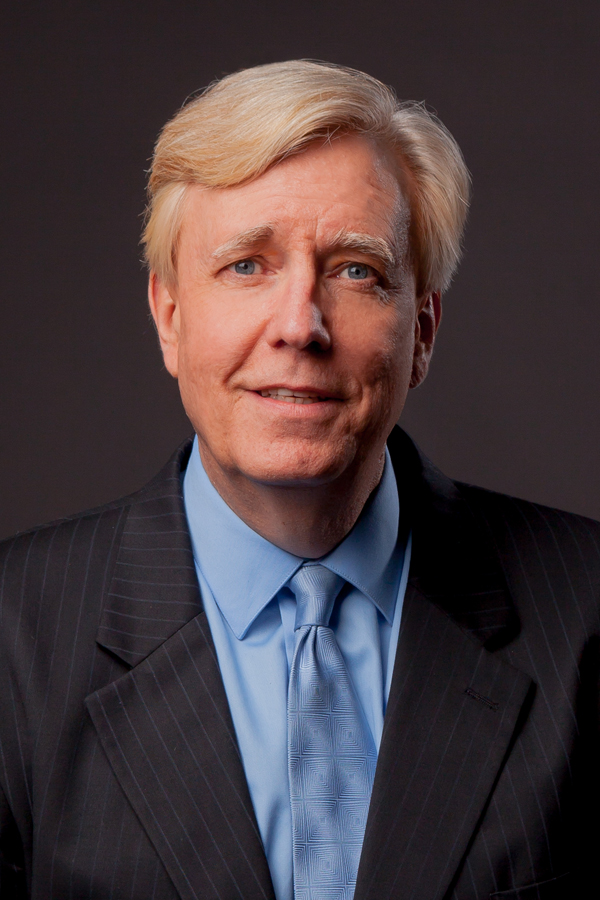
Keck plans to retire as EWTN’s president and chief operating officer effective June 30, though he will continue to host EWTN programs.

In the early 1990s, Doug Keck — then at the height of his career as a major player in the cable-TV business in New York City — sought out the EWTN booth at an industry conference, curious to know more about the Catholic network whose faith-focused programming had caught his attention.
In a sense, the few steps he took that day were part of a long and fruitful journey with the Eternal Word Television Network.
Keck’s fledgling interest in EWTN led to a job offer from Mother Mary Angelica, EWTN’s foundress, to join the production team in Alabama. After Keck and his wife agreed to uproot their family and settle down south, Keck rose steadily up the ranks. He was named executive vice president and chief operating officer, in 2009; and four years later, he became president of the network, now the largest religious media organization in the world.
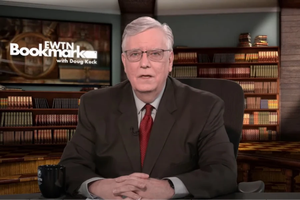
Over the course of those years, Keck played a major role in creating several of the network’s flagship TV programs, including Life on the Rock, The Journey Home, Father Spitzer’s Universe, and EWTN Bookmark, as well as The World Over, which essentially launched what would later become EWTN News, of which the Register is a part. He also pioneered programming in multiple languages worldwide and expanded the network’s coverage of live events, such as the annual March for Life.
Keck recently announced his plans to retire as EWTN’s president and chief operating officer effective June 30, though he will continue to host EWTN Bookmark and Father Spitzer’s Universe.
In a workplace brimming with dramatic personal stories of God’s habit of calling people from some of the most unlikely places to use their talents to serve the Church — starting with Mother Angelica herself — Keck, who in his former life helped to launch The Playboy Channel, has a story that’s tough to beat.
A Broadcast Whiz
Doug Keck grew up Catholic on Long Island, though his family didn’t participate much in the faith beyond the essentials. To a young Keck, priests were akin to drill sergeants, the bishop was the army general, and ordinary lay Catholics like him were the reservists; called up for service on Sunday, but otherwise left alone.
Keck was drawn to radio, TV and film at a young age and benefitted from his proximity to the Big Apple, landing an internship with a local radio station while studying at the New York Institute of Technology. He did news and deejaying for a few years before he got an invite to be an announcer at a cable TV company, Cablevision, founded by Charles Dolan, the billionaire founder of HBO, and Keck advanced quickly to the company’s top echelons.
Under Keck’s leadership on Cablevision’s programming committee, the company launched Bravo in 1980 as an arts and culture channel, and later launched American Movie Classics, later known as AMC. Keck’s team also founded another channel originally named Escapade, which later morphed into The Playboy Channel — much to Keck’s chagrin.
Keck’s high-school sweetheart and eventual spouse Theresa was “a better Catholic” than he was and helped to keep him on the right track by “dragging” him to Mass, he said — but faith remained largely a peripheral issue for Keck until 1986, when his son Matt was born. Matt has autism, and Keck said the ongoing experience of caring for Matt with an unconditional love — an experience which continues to this day — began to force him outside of himself, to begin to reassess his worldly desires and priorities.
This coincided with a growing disillusionment with the exhilarating — but spiritually shallow — work Keck was doing in TV. He said the more he rubbed shoulders with the major sports, media and entertainment personalities of the era, he began to notice something missing from many of their lives, and indeed from his own.
“Fame didn’t make them bad people; it didn’t make them good people,” he said of the successful people he met — but, he emphasized, one thing that being famous did not make them was … happy.
“So I started to think: What’s missing in my life? Well, maybe God. So I had that in the back of my mind,” he said.
Learning to Put God First
Keck points to his involvement in Marriage Encounter, a Catholic program designed to strengthen and enrich marriages through retreats, as another major step toward bringing him back to the faith. Marriage Encounter helped Keck and his wife to realize the importance of putting God at the center of their marriage — and also convinced Keck he needed to place more emphasis on his family and less on his career.
Fanning this new spark of faith, Keck later participated in Cursillo, a program of short courses designed to teach aspects of Catholicism. He said the courses led him to more deeply appreciate the God who had always been there in his life, but whom he had not previously recognized.
“It was like I was in a darkened room, and when I pulled up the shade, it was light outside; and I realized, ‘Oh, the light was always there,’” Keck said.
Discovering EWTN
Renewed in his interest in the Catholic faith, Keck quickly discovered EWTN, which had first hit the airwaves in 1981 as the country’s first major Catholic television network.
Perhaps anticipating the future flexibility and portability of podcasts, Keck soon became what he described as a “tapeworm,” dubbing EWTN television shows onto audiocassettes to listen to on a Walkman while working around the house. Keck began to wonder if he could put his talents to work to assist EWTN in polishing up its programs that were already blessing him so much — perhaps as a post-retirement project.
After an informal visit to Irondale, Alabama, to tour the EWTN studios, however, Keck continued to feel drawn away from his full-time TV job. He would attend lavish galas in California vineyards for the opening of new sports channels and find himself wishing he were helping to put Pope John Paul II on the air instead.
Then one day, while touring potential homes on Long Island, Keck said it was “put on his heart” that he ought not spend all of his money on a fancy New York house, because a job would soon come along that he would want to take but which would pay much less than he was getting at the time.
And sure enough, an opportunity came in the mid-1990s for Keck to visit Irondale again, this time for a proper meeting with Mother Angelica. Keck remembers sheepishly telling Mother about his involvement with launching The Playboy Channel, to which Mother responded, “That’s why you’re here, sweetie.”
Keck’s leap southward to EWTN wasn’t a decision for the family to take lightly, however, with a pay cut for a family with a son with special needs; a culture shock, especially for Matt and their 6-year-old daughter Caitlyn; and leaving Theresa’s large extended family.
In the end, though, the Kecks made the decision together, recognizing that the calling was not Doug’s alone.
Spreading the Good News
Colleague Patrick Campbell, EWTN’s director of technical operations, recalled traveling to New York with Keck for a conference and meeting some of Keck’s high-powered former coworkers, realizing then what a major change it must have been for Keck’s family to leave New York and settle in Alabama.
“It gave me a glimpse of the industry opportunities and the likely amazing financial rewards that he walked away from when he trusted divine Providence and came to work at EWTN,” Campbell told the Register.
Throughout his many experiences with the network, Keck said he is most proud of the fact that, for EWTN, “the No. 1 priority is the message,” that is, the truth of the Gospel — which he said he and his colleagues have never obfuscated to appeal to a larger audience.
John Elson, who worked with Keck for 27 years and serves as EWTN’s director of program acquisitions and co-productions, praised Keck’s deep love and admiration for Mother Angelica and his complete dedication to the mission of EWTN, telling the Register that Keck “frequently blessed us with his good humor and his expressions of appreciation for those who served Mother Angelica’s mission as passionately as he did. He was a model of hard work, zeal for the conversion of souls, continuous innovation and learning.”
Michelle Laque Johnson, EWTN’s communications director, told the Register, “Doug’s superpower — and what I’ll miss most about him — is his ability to quickly analyze complex situations and get to the heart of a problem.”
“He has been a wonderful mentor, who is not just a boss but a friend,” Johnson said.
As EWTN looks to the future, with a pivot to digital media well underway, Keck said he would encourage any Catholic with a talent to offer to consider, as he did, how God might be calling him or her to put that talent to use — whether that be communication on social media, on YouTube or a podcast, or in a role at a local parish.
God may not be calling every person to make a career leap as dramatic as Keck’s, of course. It takes careful discernment to understand what the best path is for each person and their family, Keck emphasized. If he is making a radical call, God will prepare you to walk through that door, he continued — but you then have to discern whether you have the guts to do so.
After all, he noted, in the Gospels, Jesus was far happier with the servant who went out and put his talents to good use.
“And that’s what we’re called to do, really,” he said. “You don’t bury what you’ve been given.”